
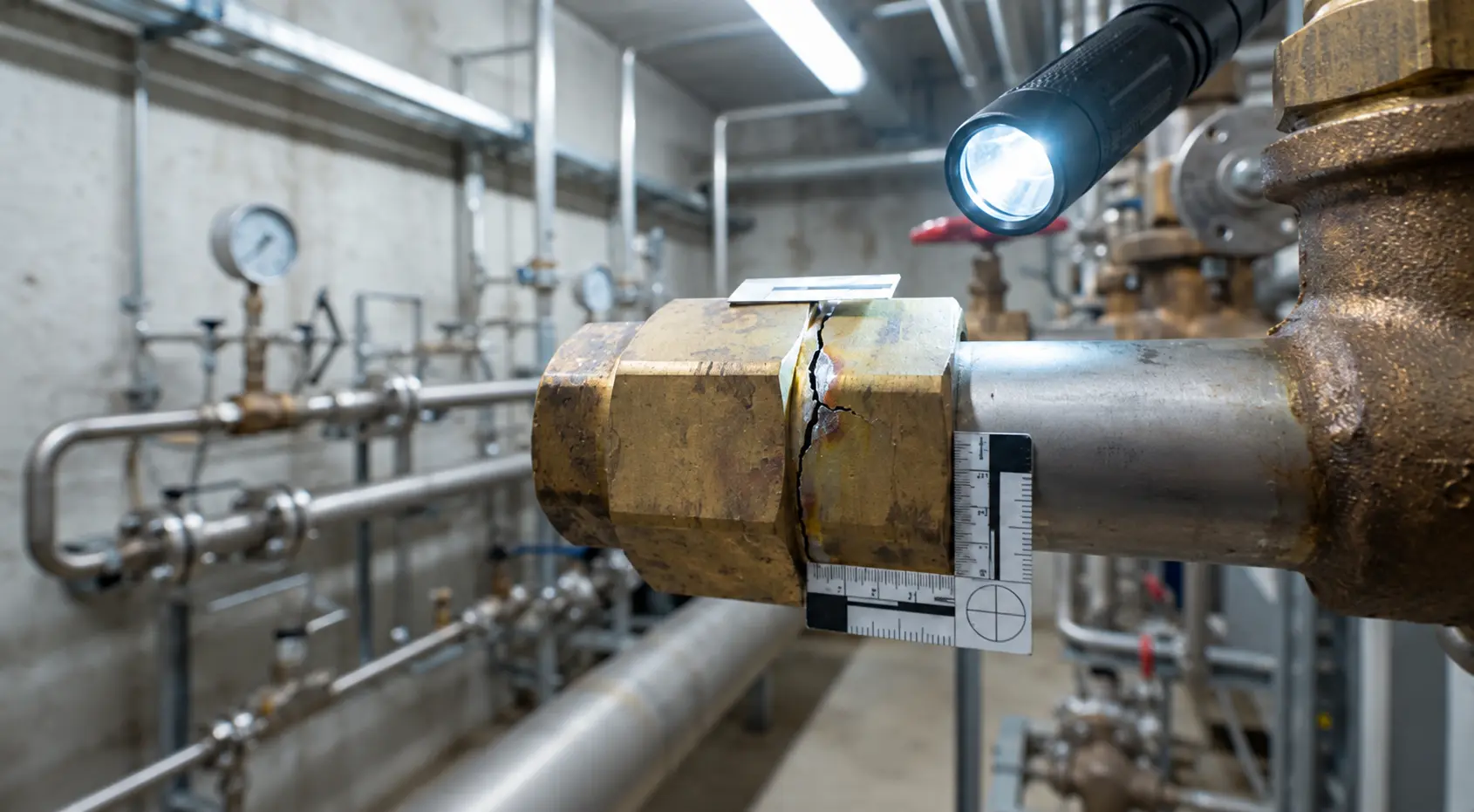
HVAC Manifold Stress Corrosion Cracking Failure
Investigation into extensive water migration across four storeys following catastrophic failure of a newly commissioned commercial brass manifold valve.
Independent forensic engineering investigation across the UK, Republic of Ireland and internationally.
FEI provides independent forensic engineering, fire and explosion, and crime-scene investigation support for civil, criminal and insurance matters. Principal-led enquiries combine practical engineering experience with structured evidence assessment to provide clear, proportionate and evidence-based opinion.
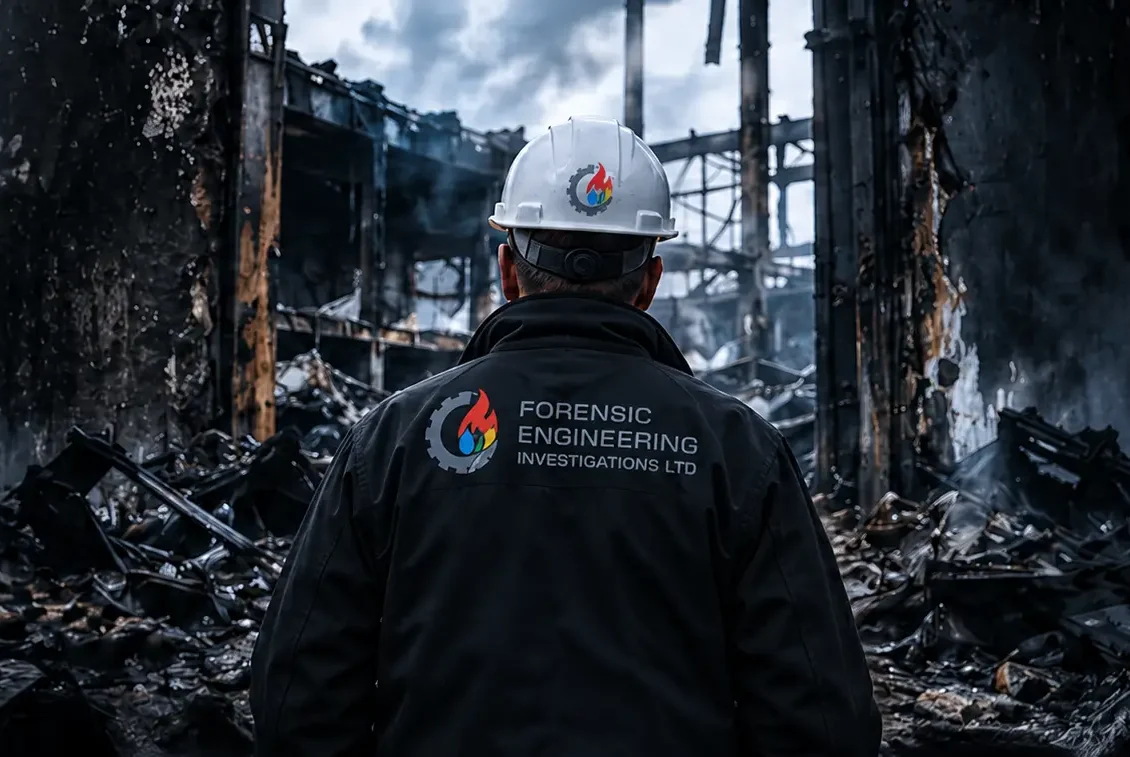
Evidence-based opinion in civil and criminal matters.
Practical mechanical and building-services experience, supported by forensic engineering and investigative expertise.
Clear, evidence-led reporting from preliminary technical advice through to CPR Part 35 and CrimPR Part 19 compliant expert evidence, where applicable to the instruction.
Rapid scene attendance and desktop investigation across the UK, the Republic of Ireland and internationally, subject to availability and the requirements of the instruction.
FEI provides evidence-led investigation of engineering failures, fires and explosions, escapes of water and oil, construction and building-services incidents, plant and machinery failures and complex forensic scenes.

Independent investigation of mechanical and building-services failures, with specialist input where required.

Investigation of domestic, commercial, industrial and marine fires, including small boats and vessels.
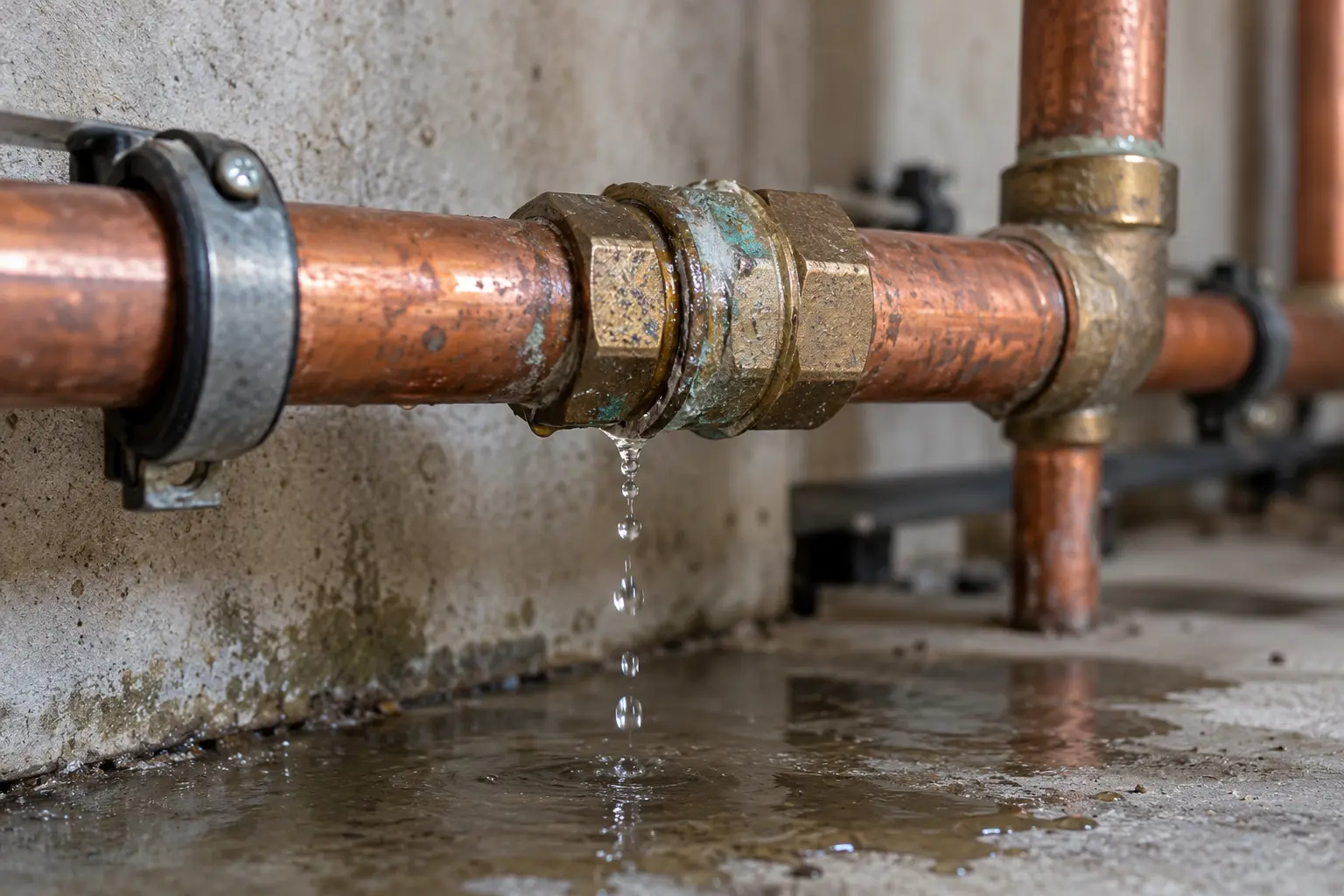
Investigation of the source, mechanism of failure and subsequent migration of water, oil and other liquids.
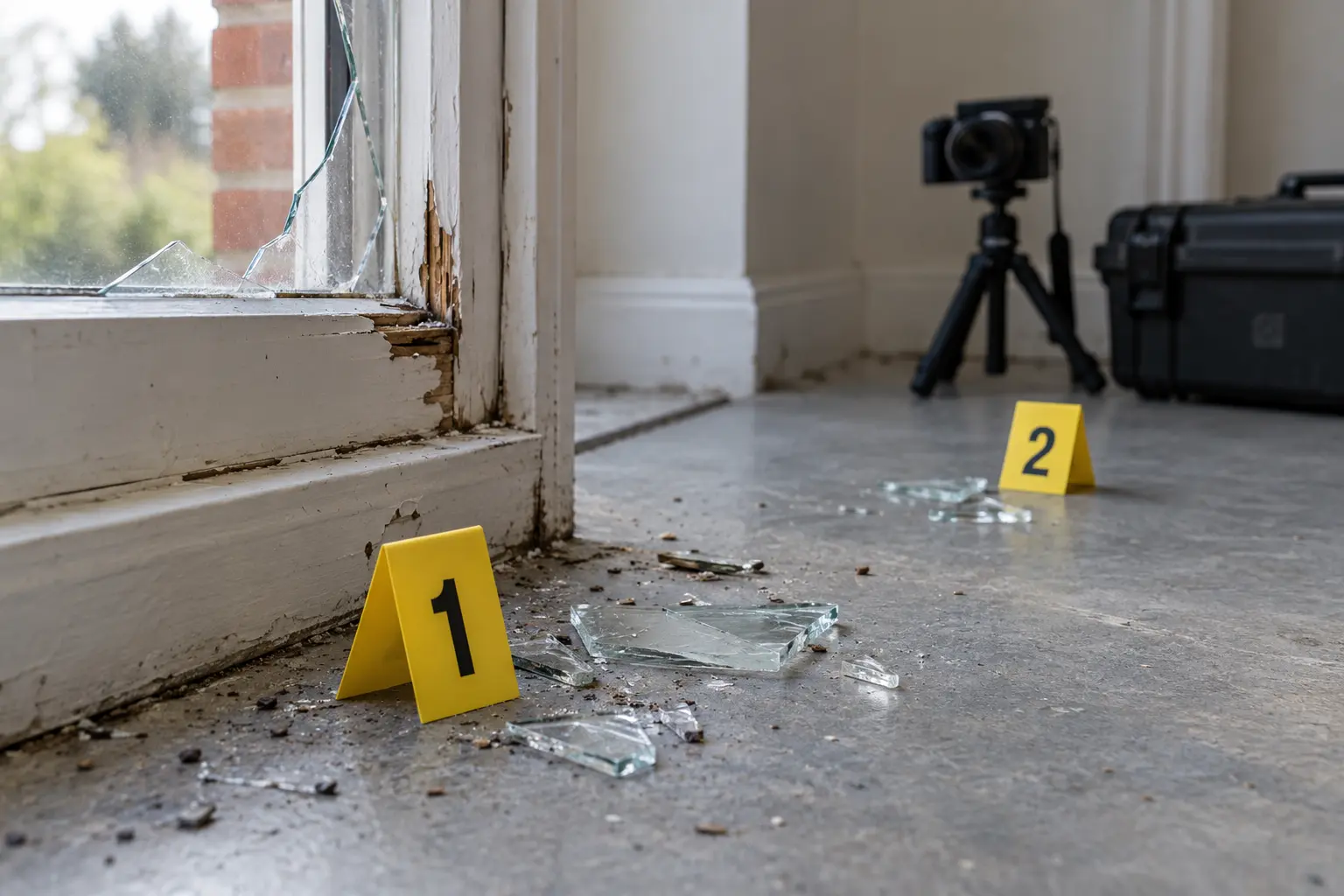
Specialist engineering and forensic support for criminal investigations involving physical evidence or specialist recovery.

Investigation of construction-related incidents involving mechanical systems, materials, installations and workmanship
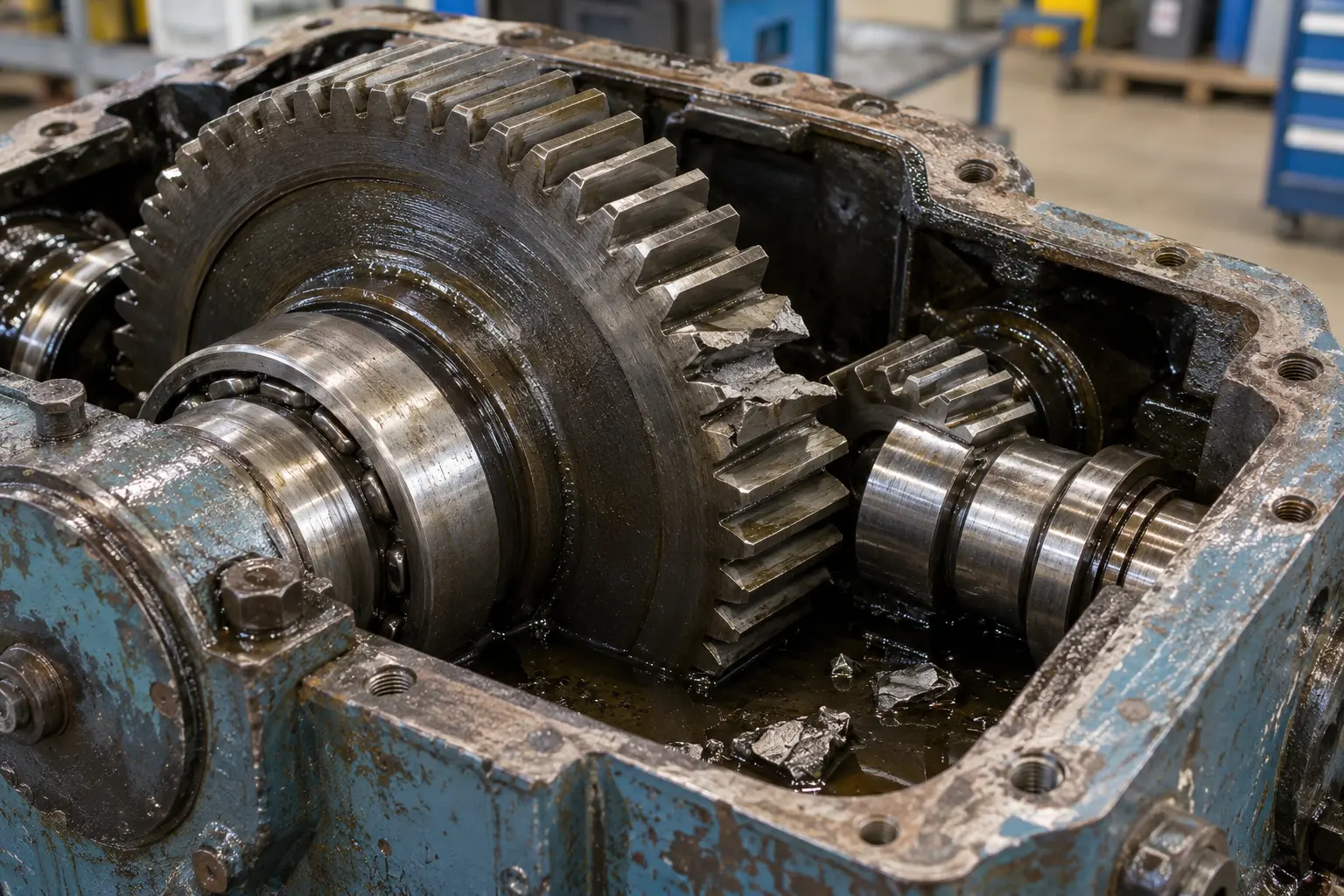
Investigation of plant and machinery failures, impact damage and tip-over incidents, with specialist support where required.
years of forensic and investigative experience

FEI brings together forensic engineering, fire and explosion investigation, and crime-scene investigation with practical experience of design, installation, operation and failure.
“The Principal Forensic Engineer’s combined academic and practitioner background supports a thorough examination not only of the physical evidence, but also of how systems are installed, used and maintained—and how failures can occur in practice. This principal-led perspective is distinctive and valuable in civil, criminal and insurance matters.”
This combination provides an understanding not only of how engineering systems fail, but how those failures should be systematically investigated, documented, tested and interpreted.
FEI considers the physical evidence alongside system design, installation, operation, maintenance, reported circumstances and reasonable alternative failure mechanisms.
The result is clear, proportionate and technically defensible forensic engineering opinion.
Tailored engagement paths from early claim screening through to formal joint testing and courtroom representation.
For a straightforward screening instruction with accessible evidence and no material dependency on outstanding documents, CCTV, testing or third parties, FEI will aim to issue the screening report within five working days of attendance. Timing is subject to scope, access, evidence availability and written agreement at instruction.
Scene examination, documentation and evidence recovery, with photogrammetry or laser scanning arranged where appropriate.
Collaborative, rigorous physical deconstruction protocol alongside co-experts, equipment manufacturers, loss adjusters, and interested legal parties.
Desktop appraisal of the available documentation and digital evidence, which may include statements, photographs, video and CCTV, expert reports, loss-adjuster and loss-assessor material, drawings, records, correspondence and digital imagery. The scope and limitations of the opinion will be stated clearly.
Where testing is required, appropriately accredited laboratories and proportionate scientific methods are used. Simulation or reconstruction may be undertaken where it is relevant, technically justified and supported by sufficient evidence. Any assumptions and limitations will be identified.
Clear, proportionate expert reporting compliant with CPR Part 35 and CrimPR Part 19, where applicable to the instruction.
Our objective is straightforward.
01. What happened?
02. Why did it happen?
03. What does the evidence support?
FEI offers a free 15-minute initial consultation or preliminary document review to help identify the key technical issues, assess whether further investigation is warranted and advise on the most proportionate next step.
Investigation into extensive water migration across four storeys following catastrophic failure of a newly commissioned commercial brass manifold valve.
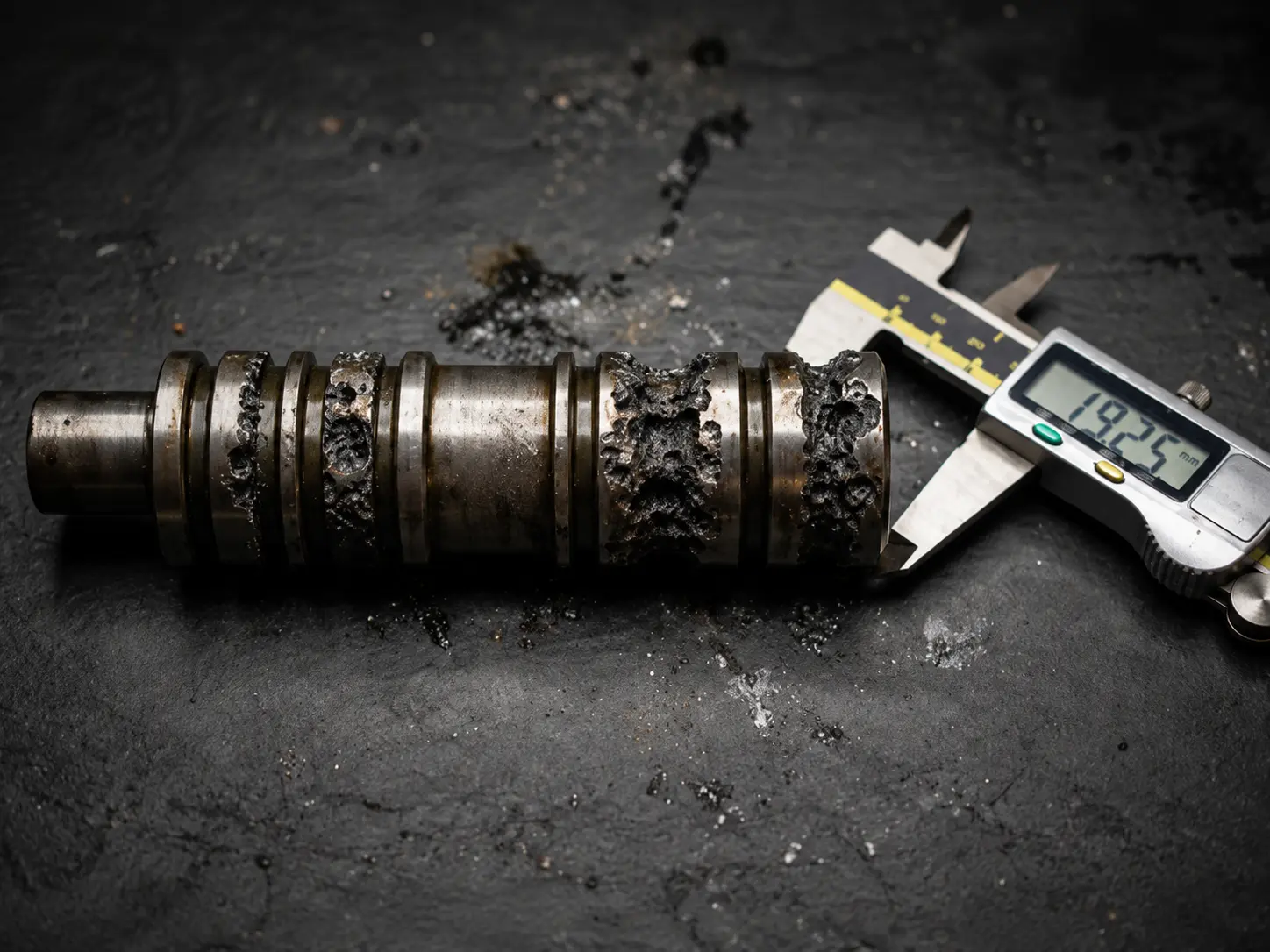
Failure mechanism determination of hydraulic injection unit collapse, distinguishing fluid contamination from design specification deficiency.

How specialist laboratory testing can support an investigation, and why results must be considered alongside the wider evidence.